
What It Is and Why It Matters
Ever opened a delivery and wondered why a perfectly good container gets used once and tossed? Same.
Packaging can be useful. It protects products, makes them easier to transport, and keeps contents contained. But the use it once and throw it away routine is worth rethinking.
That’s where closed-loop packaging comes in.
What does “closed loop” actually mean?
Think of the usual packaging journey: a container gets made, filled, used, and discarded. That's a linear system.
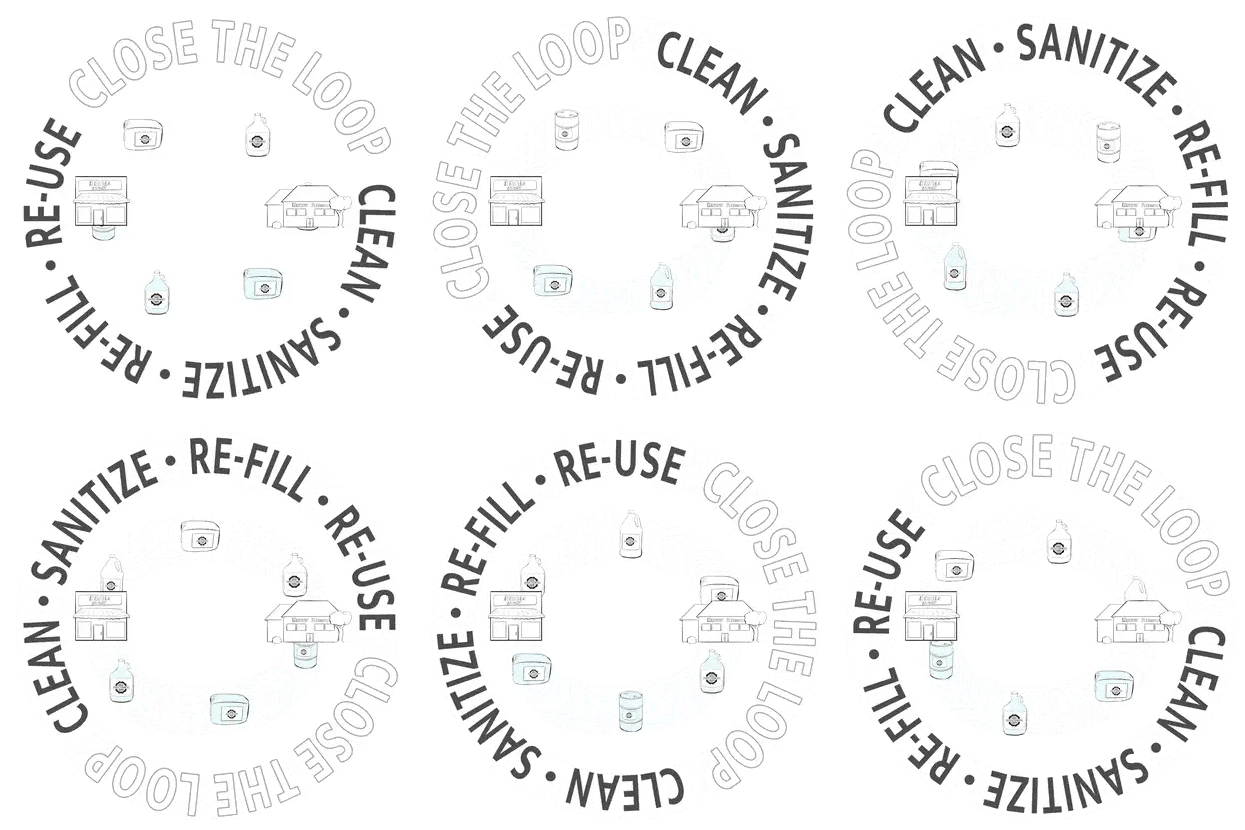
In a closed-loop system, the goal is to keep packaging materials circulating instead of treating each container as a one-time purchase. Depending on the system, that could mean a bottle is collected, washed and refilled, or a material is recovered and recycled into packaging that can be used again.
There's an important difference between something that's recyclable in theory and a system that actually collects, processes, and uses that material again. A closed loop depends on the whole process—not just the label on the bottle.
Why refilling matters
Consider a bottle of household cleaner. If the bottle is safe and suitable to reuse, why buy a new one every time the contents run out?
A refillery offers another option: bring a clean, compatible container, have it weighed empty, fill it with the product you need, and pay for the product's net weight. Reuse the bottle next time when appropriate.
It's not magic, and it doesn't eliminate every bit of packaging. Bulk products still need to arrive at the shop somehow. But reusing a durable container can reduce the need for a brand-new retail package with every purchase.
A few ways to close the loop at home
- Use what you already own. An existing, safe, suitable container is often a better starting point than buying a matching set of new jars.
- Refill when it makes sense. Check product compatibility, clean your container as instructed, and label it clearly.
- Look for genuine return-and-reuse programs. If a company collects packaging, ask what happens after it's returned.
- Recycle correctly when reuse isn't possible. Local rules vary; check what your community actually accepts.
- Buy thoughtfully. Durable, repairable, refillable items can sometimes offer more value over time than disposable alternatives.
Progress over perfection
You don't need a color-coded pantry, a zero-waste trophy, or a PhD in recycling symbols.
Start with one bottle. Refill it when you can. Keep it in use for as long as it's safe and practical. That's a real step forward.
At Compass Ridge Trading Co., we believe small, realistic changes matter more than impossible standards. If you're curious about bringing a container to our mobile refillery, come ask questions. We love helping people figure out what works for their household.
Refill. Reuse. Repeat.
Guided by Purpose. Grounded in Stewardship.